
NCRA and BSJ Perform Separate but Complementary Roles

MIIC Author
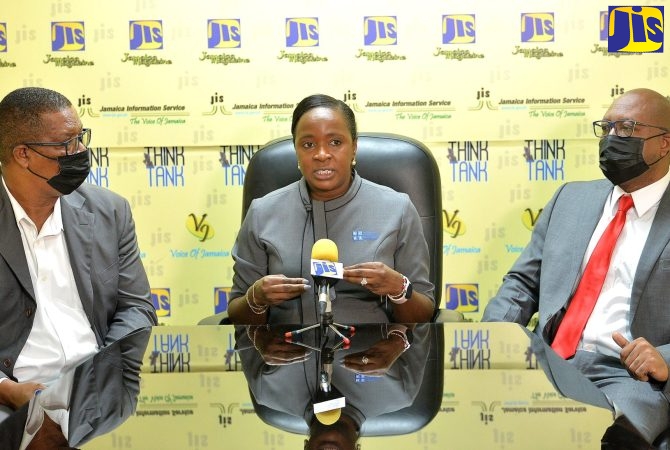
The separation of regulatory functions from the Bureau of Standards Jamaica (BSJ) to the National Compliance and Regulatory Authority (NCRA) allows for greater transparency, as the two perform separate but complementary roles.
“The separation allows the NCRA to assume the roles previously held by the Bureau of Standards, such as the inspection of facilities, inspection at the ports of entry and sampling,” Inspector-in-Charge, Food Safety Inspectorate of the NCRA, Janiese Pinnock, told JIS News.
Speaking at a Jamaica Information Service (JIS) ‘Think Tank’ on September 27, she said that the BSJ now operates as a facilitator and develops standards for commodities, services and processes, while the NCRA enforces those standards to ensure compliance.
Mrs. Pinnock outlined how this is visible in the Food Safety Inspectorate of the NCRA.
“When the Food Safety Inspectors go out, we are now totally the regulators. Previously, when we went out as the Bureau of Standards’ Inspectors, the operators expected us to tell them what is to be done and then afterwards inspect them, which you cannot do. [Now] the regulators are free to go out and do their part, which is enforcement and regulation. We can send them directly to the Bureau of Standards, but the NCRA comes in on the tail end,” she said.
Mrs. Pinnock explained that once locally produced packaged food products are ready to enter the market, the NCRA gets into gear inspecting facilities and products against the standard specifications of the BSJ.
Inspector-in-Charge of the Import and Domestic Commodities Inspectorate, Dr. Wendell Richards, added that this allows the NCRA Inspectors to carry out the range of its enforcement actions.
“For products that are non-conforming, we can withdraw them from sale, we can detain products, we can seize them, we can destroy them and we can condemn them. An inspector can enter, at any reasonable time, any establishment where a compulsory standard exists for the product being offered for sale or imported, inspect the documentation with that manufacturing, importation or process and take whatever actions they deem necessary,” Dr. Richards said.
Though the NCRA is generally at the “tail end” of a product entering the market, they are also a resource to be utilised prior to beginning the process of exporting locally produced food items.
The Authority produces certificates that declare a product as safe for resale and consumption.
“We will facilitate with a Certificate of Health or a Certificate of Free Sale, because overseas countries are asking for documentation from local manufacturers to say that the food being exported is safe,” Mrs. Pinnock said.
“The Certificate of Health basically says that for the food that is being exported, the establishment has been visited and it is registered by the NCRA. The Certificate of Free Sale says that this product is sold locally in the country of origin, so it can be sold freely in your country,” she added.
Source: JIS
Recent News
See all news


Posted on 12/10/2026
MIIC’s Hurricane Melissa Recovery – How to Access MSME Restoration Grants | Jamaica Magazine (Video)
As Jamaica continues to recover from the impact of Hurricane Melissa, the Ministry of Industry, Investment and Commerce (MIIC) remains focused on helping affected businesses rebuild and restore their operations. On this episode of Jamaica Magazine...
Posted on 12/10/2026
MSME Restoration Grant Programme | Get the Facts with Minister Aubyn Hill (Video)
Small businesses are vital to Jamaica’s economy, and we recognise the challenges many entrepreneurs continue to face as they recover from the impact of Hurricane Melissa. On this episode of Get the Facts, Senator the Hon. Aubyn Hill, Minister of I...
Posted on 10/10/2026
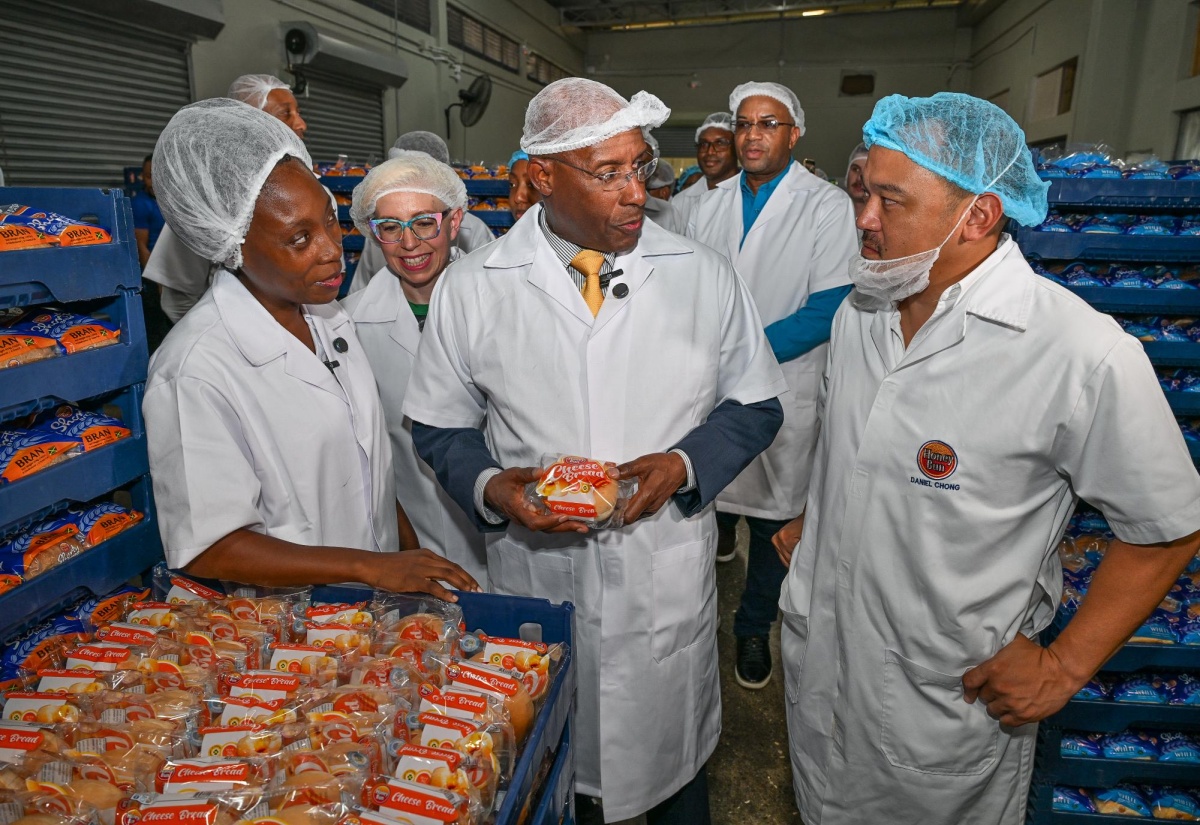
Honey Bun Opens $1-Billion Manufacturing Facility in St. Catherine
Minister of Industry, Investment and Commerce, Senator the Hon. Aubyn Hill (centre), converses with Honey Bun Chief Executive Officer, Daniel Chong (right), during a tour of the company’s new manufacturing facility at the MJS Industrial and ...