

Agriculture Ministry urges beekeepers to protect honeybees during mosquito fogging

MIIC Author
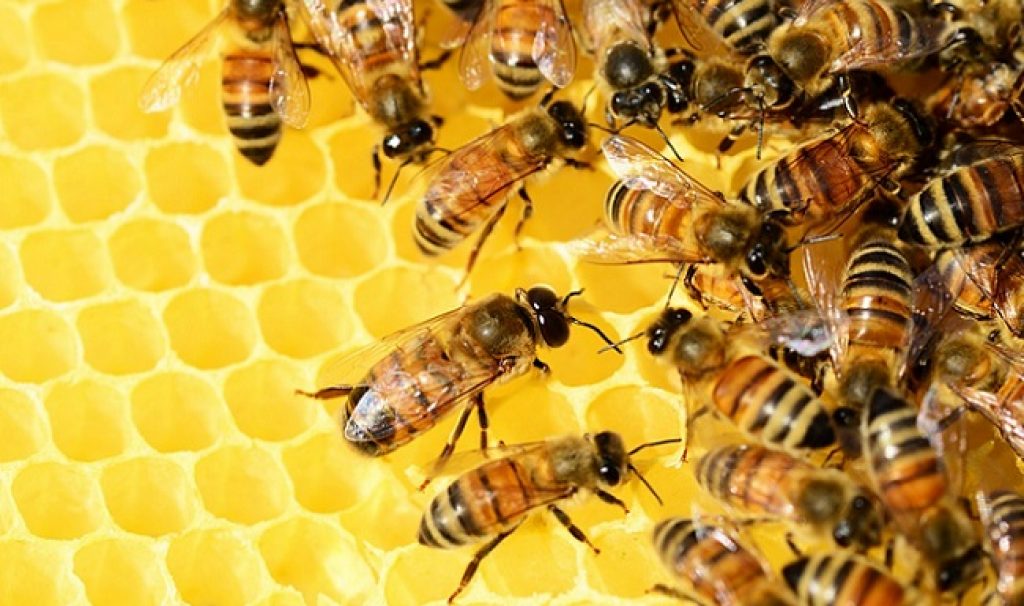
Beekeepers are being urged to take special precaution in the management of their beehives during aerial spraying and fogging.
Chief Plant Protection Officer in the Apiculture Unit of the Ministry of Industry, Commerce, Agriculture and Fisheries, Hugh Smith asserted that the chemical being used to eradicate mosquito is hazardous to the honey bees at all stages.
These are eggs, larvae, pre-pupae and adults.
“Every effort must be made therefore to prevent the fog coming into the beehives to cause destruction of the bee colonies. The fog may also contaminate stored honey and bee pollen within the beehive making them unhealthy for both bees and human consumption,” he said.
Mr. Smith recommends adherence to the following in protecting the beehive:
- Listen carefully to announcements from the Ministry of Health regarding when and where spraying will be conducted or call your local health office for schedules
- Contact neighbouring beekeepers and inform them of the procedures
- Since spraying is usually carried out at dusk, it is important to allow all foraging bees into the hives prior to preparing them against spray drift
- Remove hive covers and place an empty hive body onto each beehive then replace the covers. This will provide additional space for ventilation.
- Close all hive entrances by blocking them with rolled damped newspaper or damped cloth to absorb spray drift. The damp entrance blocks will also help to reduce the build-up of hive temperature.
- After diffusion of spray or fog
- Promptly remove entrance blocks and spray four to five mists of clean water from a spray bottle into each beehive if required.
- After removal of entrance blocks, check for and, remove dead bees from the hives. This can be observed by paying attention to outgoing bees which carry dead bees or larvae and release them on the ground close to the hive entrance.
- Additional precautions can be taken prior to spraying if found to be practical. These include:
- Covering beehives with black plastic sheeting only for a few minutes. This will reduce the chemical impact however it will cause a build-up of heat if exposed to the sun or kept covered for an extended time.
- If plastic is not available, a wet cloth can be used to cover beehives for a few minutes
- Remove covering material to prevent overheating of beehives
- Beehives can be relocated; however it may not be practical because of the financial implication.
Mr. Smith is also urging beekeepers to destroy or dispose of tin cans, old tyres, buckets and unused plastic containers that collect and hold water unnecessarily in and around their apiaries and to constantly change and properly wash water containers that are used for the feeding of bees.
-30-
Recent News
See all news


Posted on 12/10/2026
MIIC’s Hurricane Melissa Recovery – How to Access MSME Restoration Grants | Jamaica Magazine (Video)
As Jamaica continues to recover from the impact of Hurricane Melissa, the Ministry of Industry, Investment and Commerce (MIIC) remains focused on helping affected businesses rebuild and restore their operations. On this episode of Jamaica Magazine...
Posted on 12/10/2026
MSME Restoration Grant Programme | Get the Facts with Minister Aubyn Hill (Video)
Small businesses are vital to Jamaica’s economy, and we recognise the challenges many entrepreneurs continue to face as they recover from the impact of Hurricane Melissa. On this episode of Get the Facts, Senator the Hon. Aubyn Hill, Minister of I...

Posted on 10/10/2026
Honey Bun Opens $1-Billion Manufacturing Facility in St. Catherine
Minister of Industry, Investment and Commerce, Senator the Hon. Aubyn Hill (centre), converses with Honey Bun Chief Executive Officer, Daniel Chong (right), during a tour of the company’s new manufacturing facility at the MJS Industrial and ...